Google Quantum AI:
Willow, REPLIQA and What Businesses Should Know
A practical guide to Google’s quantum computing research, its current limits and the decisions businesses can make today.
By EP Agency · Published 8 October 2026 · Research checked 8 October 2026
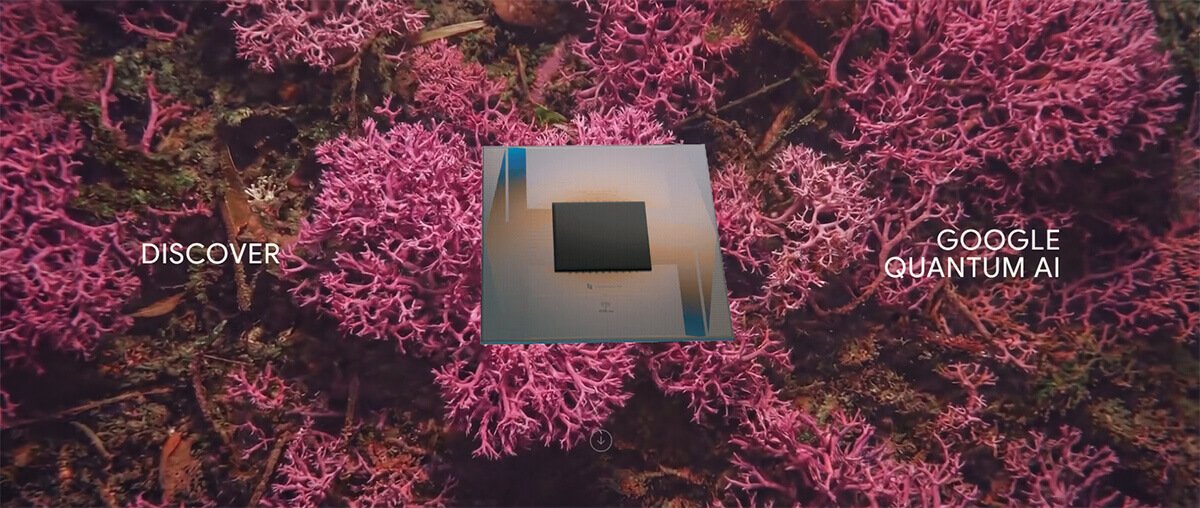
Google Quantum AI is Google’s quantum computing research programme. It develops quantum hardware, error correction and software with the aim of building useful, fault-tolerant quantum computers. For businesses, the immediate opportunity is to understand the research and prepare security systems—not to assume that a quantum processor can already improve everyday operations. Google’s research overview explains its integrated approach.
Key takeaways
- Willow is a research processor and an important error-correction milestone, not a general replacement for conventional computers.
- REPLIQA connects quantum science, AI and life sciences through long-term academic research.
- Access to Willow is selective; learning tools such as Cirq are publicly available.
- Business decisions should separate demonstrated results from proposed applications and commercial forecasts.
What does Google Quantum AI actually do?
The programme works across the computing system: processors, cryogenic equipment, control electronics, decoding and software. Its superconducting hardware needs specialised operating conditions. Improving a chip alone is insufficient; the surrounding system must also control operations and manage errors reliably.
This makes Google Quantum AI a research and engineering programme rather than an AI chatbot or an off-the-shelf business application. Its official website provides research, hardware and learning resources.
Why does Willow matter for quantum error correction?
Google announced Willow in December 2024. One central result was that larger error-correcting arrangements reduced errors rather than making them worse. This matters because useful quantum calculations must protect fragile information throughout many operations.
Google also reported a striking result on a specific benchmark. That result should not be interpreted as a speed improvement for every calculation, website or AI model. A benchmark achievement and a commercially useful application answer different questions. Read Google’s Willow announcement for the experiment’s context.
Video credit: Google Quantum AI. Watch the original video on YouTube.
What is REPLIQA, and what has Google committed?
Announced on 11 May 2026, REPLIQA stands for Research Program at the Intersection of Life Sciences & Quantum AI. Google Quantum AI and Google.org describe a $10 million commitment to research at five universities, bringing quantum science and AI into biological research.
The work includes tools such as quantum sensors and methods for studying molecular interactions. Google explicitly describes it as foundational research. It is therefore more accurate to discuss possible future scientific benefits than to claim that the programme has already delivered treatments or routine commercial drug discovery. See the official REPLIQA announcement.
Video credit: Google Quantum AI. Watch the original video on YouTube.
Can businesses use Google’s Willow processor today?
Willow is not a publicly available, self-service computing service. Google’s Willow Early Access Program selects research partners with specific experimental proposals. At the time of this review, the programme page listed a 15 May 2026 submission deadline and said selected applicants had been notified. Check that page for subsequent access announcements.
Teams can learn without hardware access. Cirq is Google’s open-source Python framework for constructing quantum circuits and running them on simulators or supported hardware. Simulation is useful for learning and testing, but does not itself establish a quantum advantage.
How should business leaders assess quantum opportunities?
Our recommendation is to start with a decision, not a technology purchase. Identify the problem, the current method and the result that would justify changing it. A proposal to improve molecular research requires different evidence from a proposal to optimise delivery routes.
- Define a measurable task. Record the accuracy, runtime, cost and data requirements of the existing approach.
- Ask what was demonstrated. Distinguish a hardware benchmark, a simulation and an experiment on a practical workload.
- Include the whole workflow. Account for data preparation, hardware access, error handling and interpretation—not only the quantum calculation.
- Set a review point. Revisit a small research pilot when evidence changes instead of committing to an unsupported adoption deadline.
For most website owners, secure systems, reliable data and useful content remain the practical priorities. Quantum research can inform a technology roadmap without becoming a reason to replace working infrastructure.
How does quantum computing relate to Q-Day and cybersecurity?
Quantum computing research and post-quantum security planning are related, but a processor announcement does not establish a date when existing cryptography will fail. NIST published its first three finalised post-quantum cryptography standards in August 2024 and encouraged organisations to begin transitioning. These standards are intended for conventional systems; adopting them does not require buying a quantum computer. Read NIST’s announcement.
Work with your security team and providers to identify cryptographic dependencies and plan tested migrations. Our Q-Day guide explains why preparation matters even when the timeline is uncertain.
Frequently asked questions
Is Google Quantum AI the same as Gemini?
No. Google Quantum AI focuses on quantum computing research. The subject here is quantum processors, experiments and software, rather than a conversational AI service.
Does Willow prove that quantum computers are faster at everything?
No. Performance depends on the task and comparison method. Google’s reported benchmark result should not be generalised to ordinary business software or all AI workloads.
Can I start learning without access to Willow?
Yes. Cirq offers publicly available tools and tutorials for building circuits and using simulators. Access to actual research hardware is a separate question.
Should my business wait for quantum computers before improving security?
No. Assessing cryptographic dependencies and discussing post-quantum migration with suppliers can begin now. Plan changes around your systems and established standards rather than an assumed Q-Day deadline.
Sources and further reading
This EP Agency explainer develops the topic introduced in SATAweb’s Google Quantum AI article, with independently checked primary references and practical business guidance.
- Google Quantum AI: hardware and software research
- Google: Willow announcement and error-correction results
- Google: REPLIQA announcement, May 2026
- Google: Willow Early Access Program
- Google: Cirq documentation
- NIST: first finalised post-quantum standards
Related reading: how AI is changing Google Search.